
Brand guidelines
Brand guidelines design services that keep your brand consistent.
A strong brand should not depend on one person remembering how everything is supposed to look or sound. Our brand guidelines design services turn those decisions into a practical reference your team, suppliers and freelancers can use every day.
- Clear rules for real-world use
- Built around the people using the brand
- Editable, versioned and ready to grow


Why it matters
Brand book design that works like a manual, not a showpiece.
Good brand book design should answer questions quickly. Which logo belongs on a dark background? What typeface should a supplier use? How should a product photo be framed? If people still need to message someone for the answer, the document is not doing enough.
We organise each brand book around the decisions people make most often. Logo usage, colour values, typography, imagery, tone of voice and application rules all sit in one place, so the brand stays consistent even when different people are creating the work.
Where consistency starts to slip
Small inconsistencies are usually signs that the rules live in people’s heads.
A logo file can be correct while the brand around it slowly drifts. These are the problems we look for before we write the guidelines, because each one points to a missing rule.
-
01
Different logo versions are still in use
The website has one version, the invoice has another and a supplier is still using an older file. Brand guidelines establish which logo is current and where each approved variation belongs.
-
02
The brand colour changes between channels
A screen colour, a printed colour and a packaging colour can look noticeably different. We define practical colour values for digital and print use so teams are not choosing a new shade every time.
-
03
Typography is being decided project by project
When no type system exists, the nearest available font often becomes the default. A style guide sets the approved typefaces, hierarchy and basic usage so new materials still feel connected to the same brand.
-
04
Logo usage changes from one layout to the next
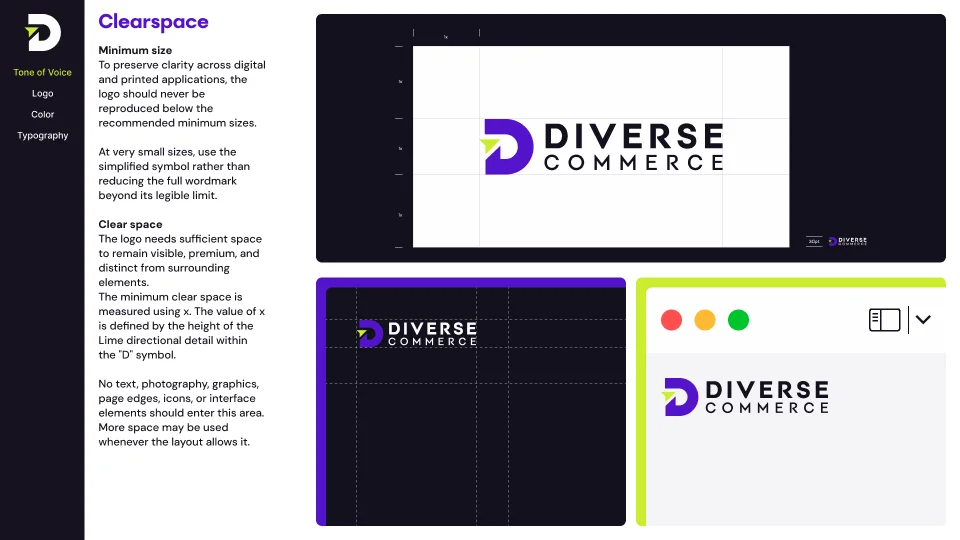
A logo needs breathing room and a clear minimum size. We document logo usage rules so it is not crowded into one layout and left floating in another.
-
05
Social content looks like a different brand each week
When every post starts from a blank page, layouts, type sizes and image treatment begin to wander. Consistency standards give your team a reliable starting point without making every post look identical.
-
06
New people learn the brand by copying old work
Copying the last file also copies its mistakes. A documented brand book gives new staff and outside partners a trusted source instead of forcing them to reverse-engineer the brand from whatever they find first.
-
The goal is simple: the same question should get the same answer, no matter who is working on the brand.
Write the rules once. Use them everywhere.
What should brand guidelines include?
Six decisions that shape useful brand standards.
The exact document depends on your business, but these six areas usually decide whether a guideline becomes useful in daily work or sits untouched in a folder.
-
The six brand standards
Your team should know which logo version to use without comparing old files. We define primary and secondary lockups, one-colour options and minimum sizes. Clear logo usage rules keep the brand mark readable across websites, packaging and marketing.
-
The six brand standards
A logo needs enough room to remain recognisable, especially in busy layouts. We set a measurable clear-space rule that designers and suppliers can follow. That removes personal judgement from routine placement decisions.
-
The six brand standards
Brand colours need to work on screens, paper and physical products. We record the correct digital and print values, along with guidance for light, dark and coloured surfaces. The result is a palette people can reproduce instead of approximate.
-
The six brand standards
Typography shapes the brand before anyone reads the copy. We define font families, weights, hierarchy and practical fallback choices where needed. The type system then gives web, social, print and internal documents a consistent voice visually.
-
The six brand standards
Image direction should be specific enough that another photographer or content creator can repeat it. We document framing, lighting, backgrounds, subject treatment and examples to avoid. This makes the visual style easier to maintain across new shoots and campaigns.
-
The six brand standards
Not every future situation will fit neatly inside a rule. The guidelines identify who can approve exceptions and how those decisions are recorded. That keeps necessary flexibility from turning into slow, accidental brand drift.
Creative direction
The visual identity design starts before the logo.
We begin by agreeing on the visual territory: what the brand should feel like, what it should avoid and how it should differ from competitors. Moodboards and references make those decisions visible early, while changes are still easy to make.
-
 01
01Identity
The mark the rest of the system is built around.
-
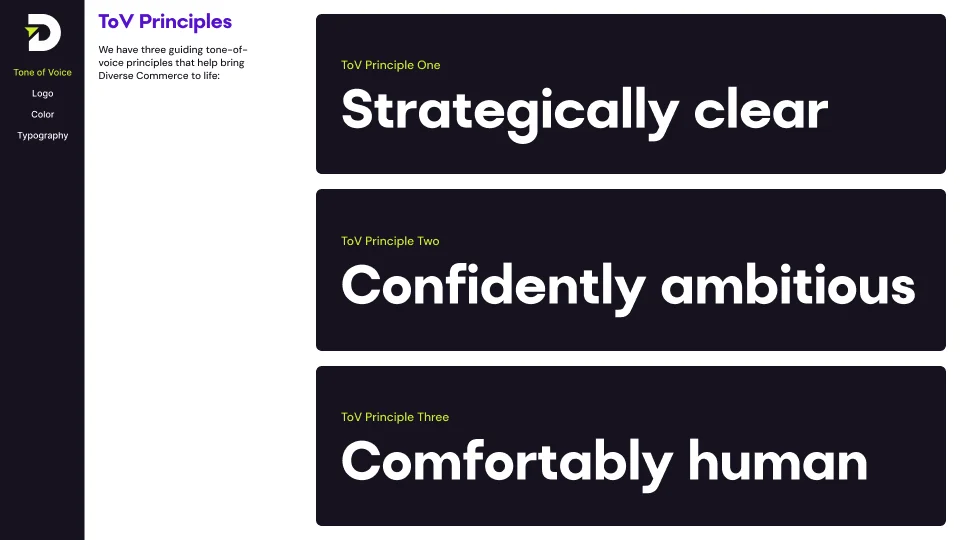 02
02Tone
Quiet, material, unhurried. The opposite of a discount brand.
-
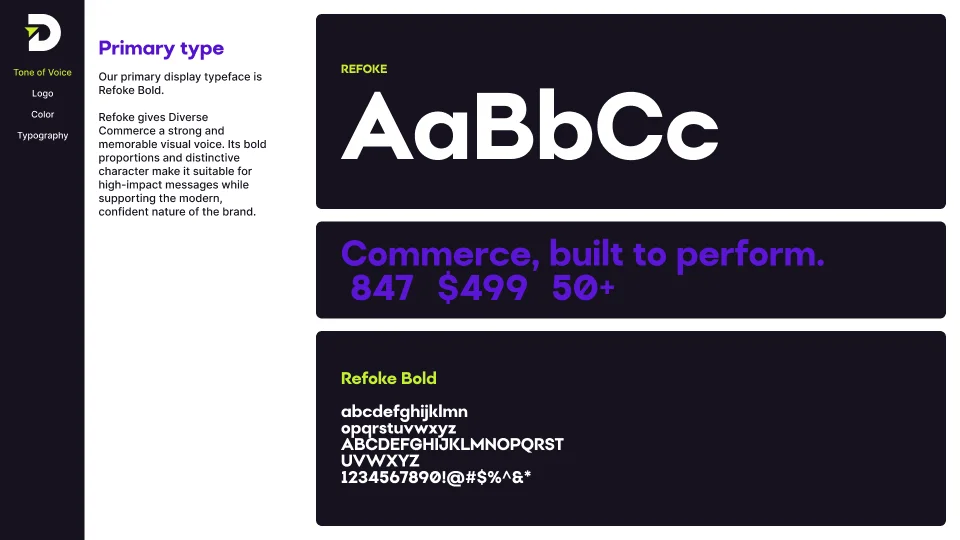 03
03Typography
A heavy display face against a plain text face. Contrast by weight, not by decoration.
-
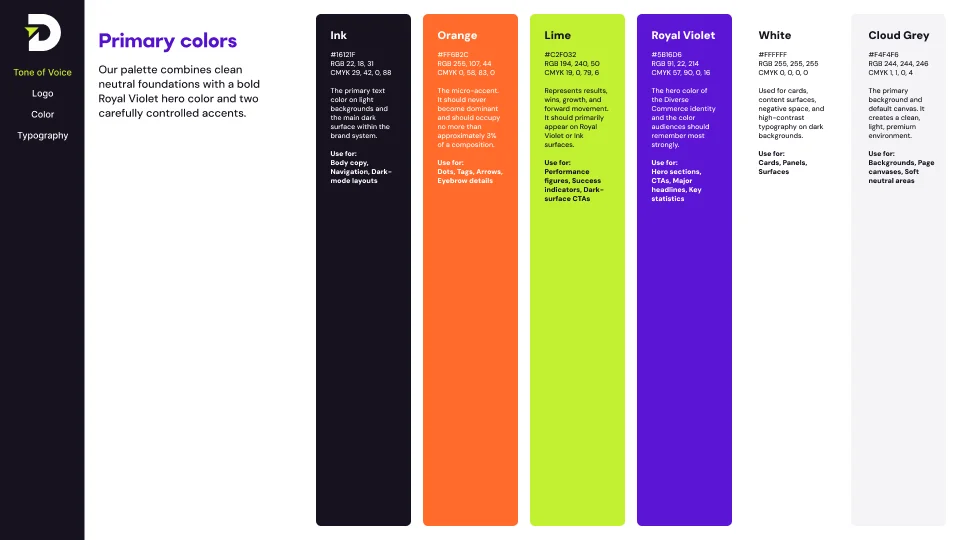 04
04Colour
One ink, one signal, one cue. A fourth colour has to argue its way in.
-
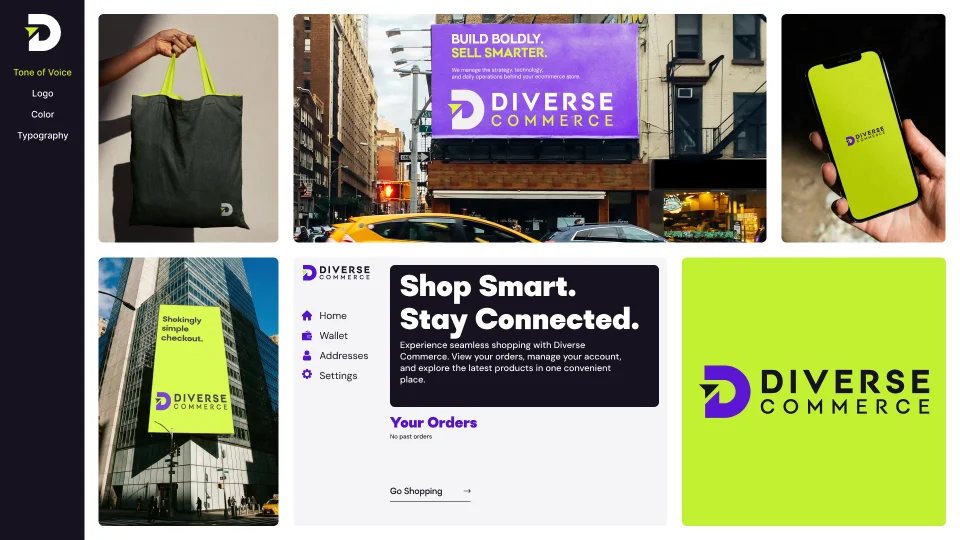 05
05Image
Daylight, close crops, real texture. No cut-outs on white.
-
 06
06Composition
Content sits on a visible grid. Edges are aligned, not centred by eye.
-
 07
07Application
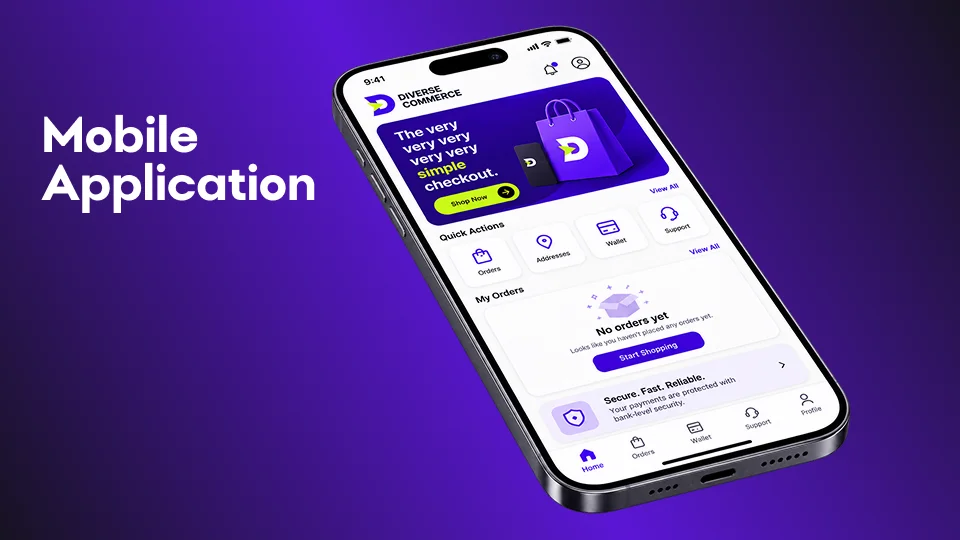
Every decision is tested on a box and a phone before it is signed off.
What you receive
Brand style guide creation built for daily use.
Page count is not the goal. The finished brand book should close the questions that slow your team down, support consistent decisions and give people the assets they need without another round of emails.
01 Identity chapters
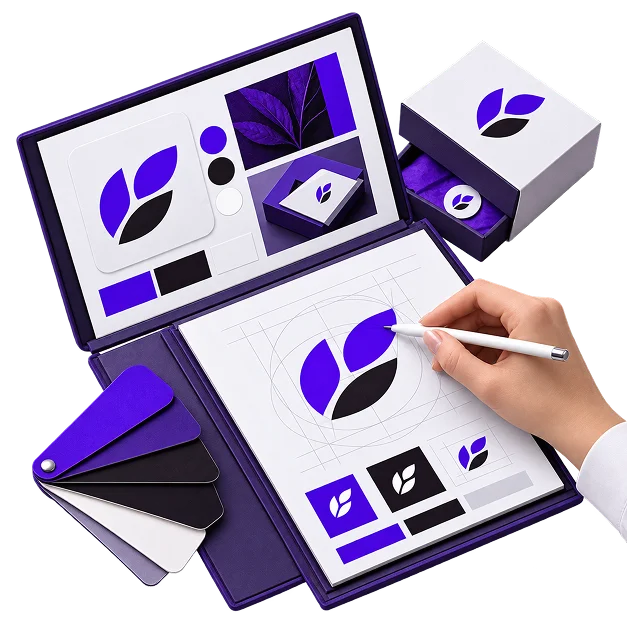
- Your identity chapters explain how the logo system, colour palette and typography should be used.
- They cover primary and secondary logo lockups, clear space, minimum size and colour references for screen and print, with examples that make each rule easier to apply.
02 Application chapters
- Application chapters show how the identity behaves once it leaves the master artwork.
- We document layout grids, image direction, social templates, packaging or campaign examples where relevant, and the practical boundaries that keep those materials recognisably yours.
03 The parts that keep it alive
- A useful style guide also explains what happens after launch.
- We include do and don’t examples, a version number, a change log and a named owner for exceptions.
- Tone of voice guidance and asset-library references can also be included when they are part of the agreed scope.
04 Handover
- Your team receives the final guideline in the agreed reading format plus editable source files where included in scope.
- We organise supporting brand assets so people can find the correct files quickly, and we walk the team through the document so the first real use is not a guessing exercise.
Ownership
Your brand book should be easy to update as the business changes.
Once the agreed project is complete and paid for, the final brand guidelines and included source files are supplied according to the project terms. We build the document so your team can maintain it, add new examples and update rules without needing the original designer for every small change.
Read how ownership worksWho this is for
Business logo design is only the start.
Guidelines become more valuable as more people touch the brand.
-
01
Your team is growing
One person can keep a brand consistent by memory for a while.
Once several employees, freelancers or agencies are creating materials, written consistency standards give everyone the same reference and reduce avoidable corrections.
-
02
You work with outside suppliers
Printers, packaging manufacturers, developers and agencies all make small brand decisions on your behalf.
A practical style guide gives them the logo, colour, typography and asset rules they need before production starts.
-
03
The identity exists, but the rules do not
You may already have a strong logo, palette and type system.
Brand guidelines turn those separate assets into a repeatable system, so the identity stays consistent across the website, sales material, packaging and social content.
-
04
You are about to scale a channel
Marketplace listings, paid campaigns, ecommerce pages and catalogues multiply whatever is already inconsistent.
Documenting the rules before you create hundreds of new assets is usually simpler than correcting the same issue across every format later.
Branding and marketing services built to work together
Your customers experience one brand, even when the work behind it spans strategy, design, search, content, advertising and customer communication. Our services are built to connect, so each decision supports the next instead of creating another disconnected part of your marketing.
Explore the services below to find the areas your business needs now, while keeping the wider brand consistent as you grow. Whether you start with identity, SEO, content or paid media, every service is designed to work as part of the same system.
- Brand Development Strategy & positioning
- Brand Design Identity & visual system
- Logo Design Mark & lockups
- Brand Guidelines You are here
- Brand Story & Messaging Voice & language
- Rebranding Identity change
- Brand Reputation Reviews & public signals
- SEO Search visibility
- Content Marketing Publishing & distribution
- Meta Ads Paid social
- Facebook Marketing Page & community
- Instagram Marketing Content system
- TikTok Marketing Short-form video
- eBay Marketing Listings & storefront
- Etsy Marketing Discovery & shop
- Google Ads Search advertising
- Google Shopping Ads Product feed advertising
- Email Marketing Lifecycle & flows
Questions
Brand guidelines questions, answered.
Straight answers to the practical questions that usually come up before a brand book project begins.
-
Brand guidelines usually cover logo usage, colour, typography, imagery and layout rules. Depending on the project, they can also include tone of voice, social templates, packaging guidance, an asset library, approval rules and consistency standards. We confirm the chapters during discovery so the document reflects how your business actually uses the brand.
-
Long enough to answer the questions your team and suppliers actually have. A shorter document with clear logo usage rules, type guidance and practical examples can be more useful than a long presentation that never tells people what to do.
-
Then brand guidelines are usually too early. The identity decisions need to exist before they can be documented, so we would normally complete the brand direction or identity work first rather than fill the book with placeholders.
-
Yes, when editable source files are part of the agreed scope. We also recommend a version number and change log so future updates are easy to track and people can tell which edition is current.
-
Most teams receive a PDF for everyday reference and supplier sharing, plus editable source files where included in scope. If your team works better from an online workspace or internal page, we can structure the content around that workflow instead.
-
Yes. When verbal identity is part of the project, the brand book can document tone of voice, preferred language, writing principles and examples of how the brand should sound in different situations. That gives writers the same kind of practical direction designers receive for visual work.
The next step
Turn the brand you already have into a system people can follow
Show us the files your team and suppliers are using now, including the messy ones. We will look for conflicting logo versions, inconsistent colours, missing rules and unclear ownership, then recommend the level of brand style guide creation your business actually needs.
A useful guideline should reduce questions, not create more of them. If the identity itself needs work before it can be documented, we will tell you that first.