
Customer support

Buyers get an answer while the question still matters

Our outsourced customer support for ecommerce stores covers pre-sale questions, delivery updates, complaints and after-sales issues in your brand voice. We work within the response windows your marketplaces expect, so buyers get a useful answer while the question still matters.

  • Marketplace response windows covered
  • Answers in your brand voice
  • Escalation limits agreed
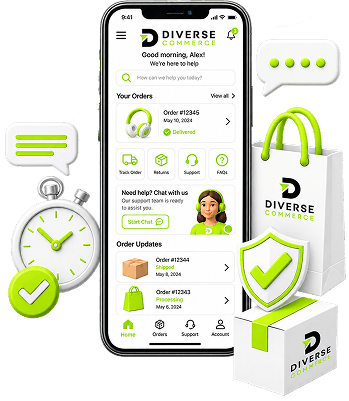
Outsourced Ecommerce Customer Support - a phone open on a help centre with order updates and a live chat

Why response quality matters

A Small Delay Can Become A Much Bigger Problem

Customer support usually slips for a simple reason: everyday messages start piling up. Buyers wait, ask again, and small issues turn into complaints because nobody clearly owned the next step.

Outsourced Ecommerce Customer Support - a delivery box beside a red warning triangle sounding an alert

The Inbox Is Connected to the Rest of the Store

A buyer message is often the sign of a problem somewhere else in the store.

A delivery question may start with fulfilment. A product question can expose a weak listing. A complaint may trace back to packaging, stock accuracy or a supplier issue. If support only answers the message, the root cause stays in place and the same problem comes back.

Inconsistent Answers Create Their Own Problems

Customers remember what the business tells them, especially when money, delivery or a replacement is involved.

If one person promises a replacement, another refuses it and a third has to ask the owner, the case becomes harder than it needed to be. Written limits and consistent answers matter because every support decision creates an expectation the rest of the business has to honour.

A working studio desk where store and brand decisions are planned.

What well-run support looks like

A desk that knows what it can decide

Good ecommerce help desk services need more than fast, friendly replies. The person answering needs enough context to understand the issue, enough authority to resolve routine cases, and a clear route for anything that still needs you.

  • Answers that remove uncertainty Product, delivery, order and policy questions should have clear answers behind them. Routine enquiries should not depend on who happens to open the inbox that day.
  • Authority with defined limits Refunds, replacements, goodwill and exceptions need boundaries. Routine decisions can move quickly without giving unrestricted authority over your money or customer commitments.
  • Escalation that happens for a reason Sensitive, unusual or higher-value cases should reach you quickly. Everything else should keep moving without turning into another approval request on your phone.
  • Support that fixes more than messages Repeated questions are useful operational information. A good customer support process feeds those patterns back into listings, fulfilment, policies and product information so the same avoidable issue appears less often.
Talk it through with us

Before the inbox changes hands

The channel sets the expectation

TikTok Shop, eBay, Etsy, Shopify and direct stores do not handle buyer communication in exactly the same way. Response windows, refund controls and message permissions vary. We map every contact point before support begins, whether it sits in a marketplace inbox, Zendesk, Gorgias, email or live chat, then set the routing and escalation rules for each one.

Outsourced Ecommerce Customer Support - email, live chat and storefront messages routed into one shared tray

From Your Policies to a Working Desk: How Support Gets Set Up

Five phases establish the operating rules before regular coverage begins. The goal is simple: settle the common judgement calls before the inbox changes hands. We run one continuous process.

01 / 05

  1. Question and Case Review

    We start with the messages you already receive: common questions, complaints, order problems and the awkward cases that take the most time. That gives the support framework real situations to work from instead of imagined ones.

  2. Answer Framework

    We document the brand voice, standard answers, delivery language, product information, policy explanations and the commitments the business is prepared to make. Routine questions then have a dependable starting point without sounding scripted.

  3. Authority and Escalation Limits

    Refund thresholds, replacements, goodwill, sensitive complaints and cases that need your input are separated clearly. The team knows what it can resolve, what must come to you and what cannot afford to wait.

  4. Access and Case Routing

    We test the path from a customer message to the order, fulfilment team or escalation point. Platform access stays limited to what the work requires and remains under your control.

  5. First Response Standard

    We review the first live replies against the agreed brand voice, limits and escalation rules. First response time is checked from the start, but speed does not override accuracy. Once the standard works in real cases, regular coverage can begin without every message needing your approval.

Who we build for

Built for different ambitions, audiences and industries

The service is the same. What it is pointed at is not — the category, the products and the priorities are decided around the person the store belongs to.

Authors and media professionalsRealtors and property professionalsEstablished business ownersWorking professionalsCareer changersPersonal brands and specialists

When real buyers start talking

What the inbox starts to reveal

Once regular handling begins, customer support becomes a live view of the store. Questions, delays and complaints show where buyers hesitate, what they misunderstand and which parts of the operation are creating avoidable contact.

01 / 06

Scroll to travel the steps

  1. Pre-sale questions expose doubt

    Buyers ask about dimensions, compatibility, delivery, materials, use and what is included when the product page has left something unclear. Those questions show exactly where the listing needs more help.

    Enquiries
  2. Order questions need context

    Before anyone replies, the order needs context. Dispatch status, tracking, fulfilment notes and delivery information should be checked first so the buyer gets a specific answer instead of a generic one.

    Enquiries
  3. Frustration changes the conversation

    A late delivery feels very different after a buyer has already waited, followed up or received the wrong item. The right response depends on the issue and on what the customer has already been through.

    Pressure
  4. Exceptions test the rules

    The unusual cases eventually show up: damaged goods, missing parcels, disputed claims, unusual refunds and requests outside policy. These situations are where the agreed authority and escalation limits either hold up or need tightening.

    Pressure
  5. Marketplace clocks keep running

    Messages keep arriving when the owner is busy. Marketplace response expectations keep running too, which is why the queue has to stay visible instead of being checked only when someone has time.

    Patterns
  6. Repetition points upstream

    When the same question or complaint keeps coming back, it is no longer an isolated conversation. It usually points to a product, listing, fulfilment or policy issue that needs attention somewhere else.

    Patterns

After the call

How the support operation develops through the year

The consultation sets the boundaries first. After that, the support operation gets better informed as real conversations show which answers, exceptions and upstream fixes matter most.

  1. Month 01

    Rules, access and handover

    We review the channels, response expectations, policies, permissions and the message patterns already in the inbox. The answer framework and escalation limits are agreed before routine buyer communication moves across.

  2. Month 02

    Live cover begins

    Regular handling starts across the agreed channels. For email and chat support services, the same answer framework, authority limits and escalation rules apply across both, so customers do not get a different version of the business depending on where they write.

  3. Month 03

    The patterns become clearer

    After a few weeks, the repeated questions become easier to spot. Product enquiries, delivery issues, complaint types and avoidable escalations start showing which parts of the framework need more detail.

  4. Month 06

    Fewer cases need guesswork

    Six months of live handling gives the help desk a stronger library of approved answers, known exceptions and tested escalation routes. More routine cases can be resolved consistently without increasing the authority originally agreed.

  5. Month 09

    The store creates new questions

    New products, seasonal demand, promotions and higher order volumes bring different questions into the queue. The reference material grows with the store so growth does not create a bigger dependence on the owner.

  6. Month 12

    A year of conversations becomes input

    At the end of the year, we review recurring enquiries, resolution patterns, escalation volume and issues that started elsewhere in the operation. Useful answers stay in the framework. Problems that should be fixed upstream become priorities for the next period.

What stays under control

The parts of support that cannot be left to drift

Once the inbox is running, good customer support depends on keeping the standards behind the replies current. Message volume changes, products change and new situations appear, so the desk cannot be left to run on old assumptions.

  • Response windows

    Buyer messages need to stay visible and be handled within the expectations of each channel. First response time and queue age are watched together, because a good answer framework has little value if messages are already sitting too long.

    Kept under control
  • Voice and answer consistency

    Your brand voice should still sound recognisable across different customers, channels and days. Similar situations should receive consistent answers without every reply reading like a copied script.

    Kept under control
  • Promises and authority

    Refunds, replacements, discounts, delivery commitments and exceptions need to stay inside the authority you approved. The desk can move routine cases quickly without slowly taking over decisions that still belong with you.

    Kept under control
  • Escalation flow

    Cases that need owner input, specialist information or urgent action require a dependable route. Escalation works best when the right cases move quickly and routine matters stay with the desk.

    Kept under control
  • Resolution follow-through

    A reply does not always close a case. If fulfilment, a supplier, a carrier or another part of the business still has to act, the case stays visible until the promised next step has actually happened.

    Kept under control
  • Recurring customer friction

    Repeated questions and complaint themes are traced back to listings, policies, fulfilment or product information. Where CSAT data is available, we use it as another signal alongside the conversations themselves. The aim is to reduce preventable contact, not just answer it faster.

    Kept under control

Questions

Before you hand over the inbox

Short answers for owners weighing up customer support outsourcing for a small business and wanting the practical details settled before customer communication moves across.

The next step

Set the rules. Then hand over the queue.

On the call, we map where buyers contact you, what they ask, which decisions you are comfortable delegating and what must always come back to you. If outsourced customer support for ecommerce is the right fit, we then build the answer framework, set the limits and take responsibility for day-to-day coverage inside them.

No pressure. We will explain what we would handle, what we need from you and whether the service fits the way your store actually operates.